




















Chưa phân loại
Length, Width and Height: A Buyer’s Guide to Getting Packaging Dimensions Right
HKKAYU • B2B buying guide
Length, Width and Height: A Buyer’s Guide to Getting Packaging Dimensions Right
Length x width x height of a package seem like the simplest parts in a packaging instruction, until you get a box so tightly packed that you can’t…
Planning brief
What usually gets confirmed early
- Hướng phát triển chính của sản phẩm và các bộ phận in ấn liên quan.
- Tình trạng tác phẩm nghệ thuật, khung số lượng và thời gian phê duyệt.
- Địa điểm giao hàng, mức độ ưu tiên hoàn thành và thời hạn thương mại.
Mục lục
Chuyển đến phần bạn cần
Trọng tâm đọc B2B
Những điều mà người mua, trưởng bộ phận mua sắm hoặc chủ dự án cần xác nhận
- Hãy kiểm tra xem đề xuất này ảnh hưởng như thế nào đến tính rõ ràng của thông số kỹ thuật, quy trình phê duyệt và tính nhất quán của các đơn hàng lặp lại.
- Hãy xem bài viết này như một công cụ hỗ trợ mua hàng, chứ không chỉ là tài liệu tham khảo về thiết kế: các yếu tố như mua sắm, thời gian giao hàng và kiểm soát sản xuất đều rất quan trọng.
- Xác nhận bước tiếp theo dựa trên thời điểm ra mắt sản phẩm, thị trường mục tiêu và bản yêu cầu thiết kế bao bì tổng thể.
Length x width x height of a package seem like the simplest parts in a packaging instruction, until you get a box so tightly packed that you can’t even move the product or a carton that appears fine in the drawing but ends up contributing unnecessary volume to all the shipments. For brand owners, sourcing teams and product launch managers, size is not simply a formality on the specification sheet to be filled in. On the contrary, it is the key decision that determines if the product fits, if the shipping cost stays within reasonable limits, and the most obvious question "Does the pack look good on a shelf or when it’s being unboxed?
This paper will help you understand precisely what length, width, and height of packaging mean and give a hands-on method of how to measure them, as well as point out mistakes in dimensions, which most often lead to time or money losses for B2B teams.
Chuyển đến phần bạn cần
- Why dimensions matter more than they seem
- What length, width and height mean on a box
- How to measure a box correctly
- Internal vs external dimensions
- The standard order: length x width x height
- Common mistakes worth avoiding
- Turning dimensions into a quote-ready brief
Why dimensions matter more than they seem
Packaging is the layer that shields products from the moment they leave production until they get to the customer or a retail shelf that is, if not in a good condition. Protection decreases even after the slightest errors with the product dimensions.
Product fit and protection. A well-sized box barely leaves any space for the product to slip while it is being handled or transported. Too much extra room leads to the movement of the item inside a cardboard box; too little results in a product or a package themselves being injured during filling or closing.
Freight and shipping cost. A lot of carriers set price for their service based on dimensional weight, meaning besides weight the actual size of the shipped package is taken into account. So a too large a box may result in freight cost being a lot even for each shipment not only for the first one.
Storage and pallet efficiency. Precise size of a package is very important. It greatly contributes towards planning and arranging the products in layers and on pallets for storage as well as optimizing warehouse space. Tiny measurement mistakes can easily snowball into big issues when a short sample moves on into the big full-scale production phase.
You can actually save money, maintain the protection level and look great at a product level by taking some time to get that length, width, and height right early on in the brief stage.
What length, width and height mean on a box
It is important to know precisely what each definition refers to before making contact with a supplier to confirm a dimension.
- The longer side of the box base is the length.
- The width But is a measurement of the shorter portion of the base which can also be seen at 90 degrees to the length.
- Height refers to the distance of the vertical side of the box from the ground.
Length + Width + Height gives us the total volume of the box or carton. These three metrics are the main basis for verifying the box size, the consumption level of the material and transporting planning with your supplier.
How to measure a box correctly
Measuring a box can be a simple task when the measuring procedure is standardized. A thorough starting brief of a box may usually be given to a production team in a form of:
- First, spread out the box with the side where the opening or the flap is facing upwards before measurement.
- Take measurement of the longer side of the base which will be the length.
- Measuring the height side of the base which should be measured at a right angle to the length side. This will be the width.
- Height measurement is the vertical distance from the base to the top of the box.
- Done, make sure the units (inches or centimeters) match the ones for the three dimensions. Also confirm with the supplier if the requested size is the internal or the external one before handing over the production team a supplier specification.
Mixing of units or mixing internal and external figures for a same spec sheet are the common issues that may easily occur from a buyer to a production team.
Internal vs external dimensions
Such differences might seem very minor at first glance; though, one of the most frequent clarification points that come up during very early packaging consultations are precisely these sorts of issues.
- Internal dimensions refer to the measurement of the space that will actually be usable inside the box. They are the numbers that let you know that the item inside will be properly protected with no chance for the product to shift around.
- External dimensions refer to the overall measurement of the boxed product (ready to ship) that includes things like board thickness and structural elements. The external dimensions are so relevant for calculating freight charges and the warehouse layout and pallet plan.
For product fit, internal dimensions are the key. Whereas, in freight and warehouse planning, the focus is more on external dimensions. A clear statement that defines in detail from the beginning the basis of reference (internal or external) will prevent having to go through several iterations back and forth when prototypes get involved.
The standard order: length x width x height
Typically, dimensions for boxes are printed in length x width x height (L x W x H) format. Although the box remains physically the same size no matter the order of the dimensions, this convention has been adopted to help prevent confusion between the customer’s team and the supplier’s production staff. A mailer box that is listed as 16 x 12 x 8 inches, for instance, is a way of saying the box is 16 inches long, 12 inches wide, and 8 inches tall.
Certain categories are more likely to use a different order for reference purposes. These are usually taller or narrower structures that may be labeled differently in the specification sheet or the supplier’s internal documentation. At that moment, better to double-check clearly than to assume the standard applies, In particular a first order with a new supplier.
Common mistakes worth avoiding
The root causes of the most problems related to dimensions in packaging production can usually be pinpointed to a few preventable errors:
- Jumbling up internal and external measurements within the same specification document.
- Sometimes using imperial, sometimes metric units in a specification sheet.
- Not checking with a supplier which way round the dimensions are.
- Measuring a material once and forgetting to re-measure it after a material or a finish change which might slightly affect its internal dimensions.
- Postponing the check on dimensions until the very last stage of the approval process when even a minor change would require redoing artwork and finishes.
It is quite a few things, but all of them are quite simple mistakes to avoid, if only the company is treating the dimensions like something unchanging that needs confirmation at the very beginning of the project and rechecking it before the product is made in the thousands.
Turning dimensions into a quote-ready brief
Correct length, width and height measurements are one of the quickest ways to bring a packaging discussion from preliminary investigations to a supplier quote a brief. A brief that is quote-ready typically has:
- A final size showing whether it’s an inside or outside dimension.
- A consistent unit of measurement applied throughout the description.
- Critical details about the product that might impact the packaging like weight, the item’s susceptibility to damage or an irregular shape.
- Range of the quantity, intended market of the product and time-frame for the delivery.
- All dependent product elements like inserts, labels or protect liner that are to be packaged in matching dimension of the primary package.
With those details settled, the supplier will be able to talk about the structure, material and cost with much less discussion, and future orders will continue to be the same since the reason of dimension in the first place has already been recorded.
Câu hỏi thường gặp
What is the correct order for writing box dimensions?
The standard convention is length x width x height. Length is the longer side of the base, width is the shorter side of the base, and height is the vertical distance from base to top.
Should I give a supplier internal or external dimensions?
It is best if you can give both internal and external dimensions to a supplier. Whereas the internal dimensions help in fitting the product, the external dimensions will allow a supplier to plan the shipping and storage. To avoid confusion when sampling, just state which is which in the brief.
Does the dimension order actually change the size of the box?
Definitely not. Just changing the sequence of the dimensions written doesn’t alter the sizes, but maybe it creates confusion between a buyer and a production team, That’s why it is better to stick to a standard order.
What is the easiest way to avoid dimension-related rework?
Confirm the unit, confirm internal versus external, and re-check measurements after any material or finish change before mass production begins.
Ready to move a packaging brief forward?
Share the product details, target dimensions, quantity band and destination market, and HKKAYU can review the structural fit, material options and production timeline for custom packaging boxes, labels, cigarette packaging or security print.
Các sản phẩm liên quan
Các sản phẩm mà hướng dẫn này giúp giải thích
Hãy sử dụng các tùy chọn sản phẩm này để chuyển từ giai đoạn nghiên cứu sang các định dạng, cấu trúc và tùy chọn thành phần cụ thể được đề cập trong hướng dẫn.
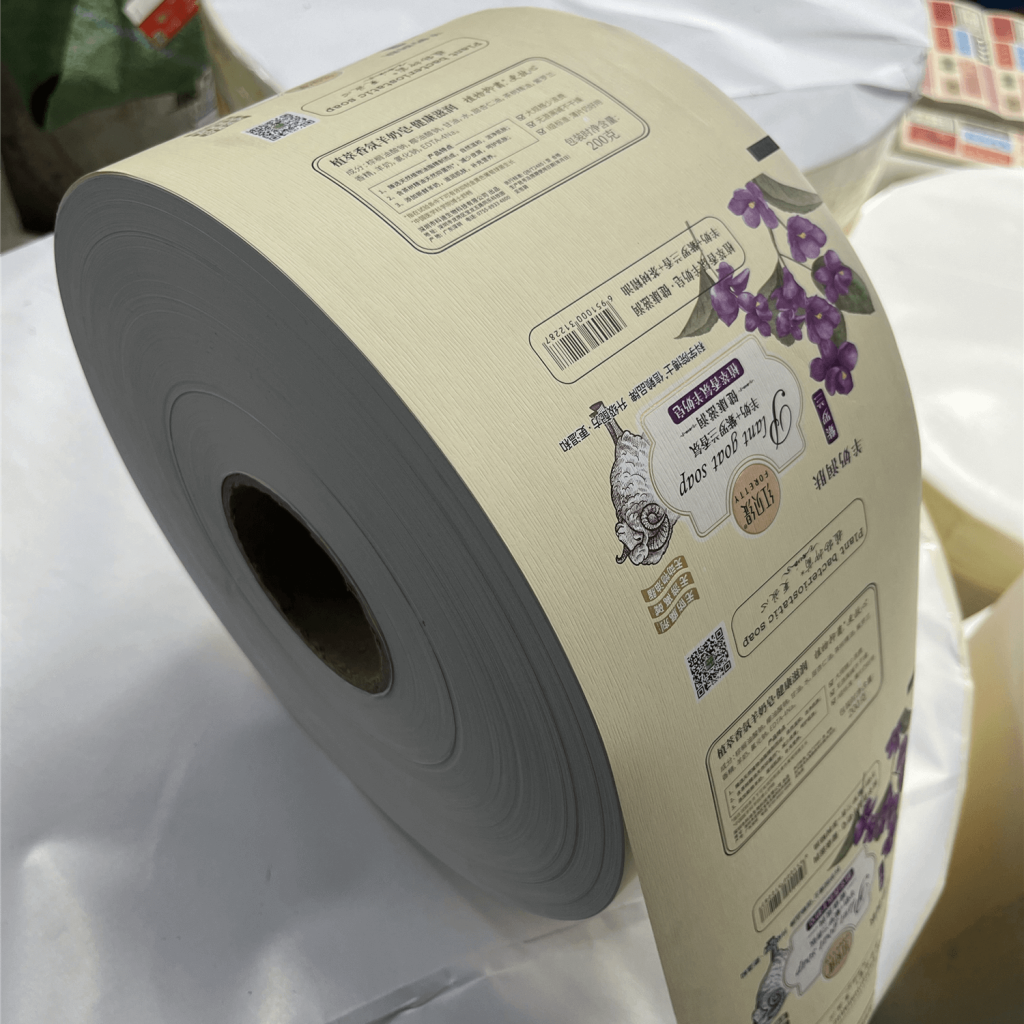 Nhãn mác và bao bìMàng bao bì xà phòng in theo yêu cầu kèm giấy gói gấp có lớp sáp dành cho xà phòngXem xét giải pháp in ấn tùy chỉnh màng bao bì xà phòng kết hợp với giấy gói gấp có lớp sáp dành cho xà phòng như một lựa chọn cụ thể trong lĩnh vực Nhãn mác và Bao bì, đồng thời so sánh các loại hoàn thiện,…Xem sản phẩm
 In nhãn màuCannabis Stickers: Durable, Compliant & Custom Printed Labels for Cannabis ProductsReview Cannabis Stickers: Durable, Compliant & Custom Printed Labels for Cannabis Products as a concrete option within Color Label Printing and compare finish, format…Xem sản phẩm
 Bán buôn hộp đựng thuốc láHộp đựng thuốc lá theo yêu cầuHãy xem xét các hộp thuốc lá tùy chỉnh như một lựa chọn cụ thể trong danh mục bán buôn hộp thuốc lá và so sánh các yếu tố như chất liệu hoàn thiện, kiểu dáng và quy trình đặt hàng để tìm ra giải pháp phù hợp nhất với yêu cầu của bạn.Xem sản phẩm
 Bao bì thuốc láCác xu hướng mới trong bao bì thuốc lá: Lớp lót giữ ẩm cho thuốc lá, màng BOPP, màng PET, màng hàn nhiệt và nhãn dán mở có thể tháo rờiĐánh giá các xu hướng mới trong bao bì thuốc lá: Lớp lót giữ ẩm cho thuốc lá, màng BOPP, PET, màng hàn nhiệt và nhãn dán mở có thể tháo rời như một giải pháp cụ thể trong bao bì thuốc lá…Xem sản phẩm
Các tùy chọn kết nối
Các lựa chọn thương mại liên quan đến hướng dẫn này
Các tùy chọn liên kết này giúp hướng dẫn luôn gắn liền với các danh mục sản phẩm liên quan và các lựa chọn thương mại chính mà người mua thường xem xét trước khi gửi yêu cầu.
Các câu hỏi thường gặp về lập kế hoạch
What details help speed up planning for Length, Width and Height: A Buyer’s Guide to Getting Packaging Dimensions Right?
Một bản yêu cầu ban đầu rõ ràng thường bao gồm các thông số kỹ thuật về kích thước, hướng sợi vải, yêu cầu về bề mặt hoàn thiện, số lượng, các yêu cầu của thị trường và địa điểm giao hàng. Những thông tin này giúp loại bỏ sự phỏng đoán trước khi tiến hành lấy mẫu hoặc lập báo giá.
Can Length, Width and Height: A Buyer’s Guide to Getting Packaging Dimensions Right be aligned with related packaging components?
Đúng vậy. Các công việc thường diễn ra suôn sẻ hơn khi các thành phần liền kề được kiểm tra cùng nhau, đặc biệt là trong những trường hợp mà sự đồng nhất về hoàn thiện, các thủ tục phê duyệt, tính năng bảo mật hoặc hiệu suất vận chuyển phải được duy trì nhất quán trên toàn bộ lô hàng cuối cùng.
How can I move from research to a quotation for Length, Width and Height: A Buyer’s Guide to Getting Packaging Dimensions Right?
Vui lòng điền vào biểu mẫu liên hệ với các thông tin về kích thước chính, tình trạng bản vẽ, số lượng và địa điểm giao hàng. Điều này sẽ giúp HKKAYU có đủ thông tin để đánh giá tính khả thi và đưa ra hướng dẫn báo giá, thay vì chỉ phản hồi dựa trên một bản yêu cầu không đầy đủ.
Điều gì thường giúp cuộc thảo luận với nhà cung cấp tiếp theo diễn ra suôn sẻ hơn?
Hãy chia sẻ thông tin về thị trường mục tiêu, khoảng số lượng, yêu cầu về chất lượng hoàn thiện, phương thức vận chuyển và bất kỳ thành phần liên quan nào cần phải phù hợp. Điều này giúp cuộc trao đổi tiếp theo dựa trên thực tế công việc thay vì những giả định chung chung.
Hướng dẫn mua hàng
Các hướng dẫn mua hàng khác trong cùng dòng sản phẩm
Tiếp tục so sánh thông số kỹ thuật, thông tin phê duyệt và các lựa chọn sản phẩm tương tự thông qua các tài liệu tham khảo liên quan này.
HKKAYU
Bạn đã sẵn sàng biến bản tóm tắt này thành một bước đi thiết thực tiếp theo chưa?
Hãy cung cấp các thông số chính, số lượng, tình trạng bản thiết kế và địa điểm giao hàng; HKKAYU sẽ xem xét đơn hàng dựa trên thực tế sản xuất.
Điều gì thường mang lại hiệu quả trước tiên
Gửi bản tóm tắt yêu cầu ban đầu chi tiết hơn
- Hướng phát triển chính của sản phẩm và các bộ phận in ấn liên quan.
- Tình trạng tác phẩm nghệ thuật, khung số lượng và thời gian phê duyệt.
- Địa điểm giao hàng, mức độ ưu tiên hoàn thành và thời hạn thương mại.
