




















Sin categoría
Length, Width and Height: A Buyer’s Guide to Getting Packaging Dimensions Right
HKKAYU • B2B buying guide
Length, Width and Height: A Buyer’s Guide to Getting Packaging Dimensions Right
Length x width x height of a package seem like the simplest parts in a packaging instruction, until you get a box so tightly packed that you can’t…
Planning brief
What usually gets confirmed early
- Dirección principal del producto y componentes impresos relacionados.
- Estado de las ilustraciones, banda cuantitativa y plazos de aprobación.
- Destino de la entrega, prioridad de acabado y plazo comercial.
Índice
Saltar a la sección que necesite
Enfoque de la lectura B2B
Lo que un comprador, jefe de compras o propietario de proyecto debe confirmar
- Compruebe cómo afecta la recomendación a la claridad de las especificaciones, el flujo de aprobación y la coherencia de los pedidos repetidos.
- Utilice el artículo como ayuda para la compra, no sólo como referencia de diseño: la adquisición, el plazo de entrega y el control de la producción importan.
- Confirmar el siguiente paso en función del calendario comercial, el mercado de destino y las instrucciones generales de envasado.
Length x width x height of a package seem like the simplest parts in a packaging instruction, until you get a box so tightly packed that you can’t even move the product or a carton that appears fine in the drawing but ends up contributing unnecessary volume to all the shipments. For brand owners, sourcing teams and product launch managers, size is not simply a formality on the specification sheet to be filled in. On the contrary, it is the key decision that determines if the product fits, if the shipping cost stays within reasonable limits, and the most obvious question "Does the pack look good on a shelf or when it’s being unboxed?
This paper will help you understand precisely what length, width, and height of packaging mean and give a hands-on method of how to measure them, as well as point out mistakes in dimensions, which most often lead to time or money losses for B2B teams.
Saltar a la sección que necesite
- Why dimensions matter more than they seem
- What length, width and height mean on a box
- How to measure a box correctly
- Internal vs external dimensions
- The standard order: length x width x height
- Common mistakes worth avoiding
- Turning dimensions into a quote-ready brief
Why dimensions matter more than they seem
Packaging is the layer that shields products from the moment they leave production until they get to the customer or a retail shelf that is, if not in a good condition. Protection decreases even after the slightest errors with the product dimensions.
Product fit and protection. A well-sized box barely leaves any space for the product to slip while it is being handled or transported. Too much extra room leads to the movement of the item inside a cardboard box; too little results in a product or a package themselves being injured during filling or closing.
Freight and shipping cost. A lot of carriers set price for their service based on dimensional weight, meaning besides weight the actual size of the shipped package is taken into account. So a too large a box may result in freight cost being a lot even for each shipment not only for the first one.
Storage and pallet efficiency. Precise size of a package is very important. It greatly contributes towards planning and arranging the products in layers and on pallets for storage as well as optimizing warehouse space. Tiny measurement mistakes can easily snowball into big issues when a short sample moves on into the big full-scale production phase.
You can actually save money, maintain the protection level and look great at a product level by taking some time to get that length, width, and height right early on in the brief stage.
What length, width and height mean on a box
It is important to know precisely what each definition refers to before making contact with a supplier to confirm a dimension.
- The longer side of the box base is the length.
- The width But is a measurement of the shorter portion of the base which can also be seen at 90 degrees to the length.
- Height refers to the distance of the vertical side of the box from the ground.
Length + Width + Height gives us the total volume of the box or carton. These three metrics are the main basis for verifying the box size, the consumption level of the material and transporting planning with your supplier.
How to measure a box correctly
Measuring a box can be a simple task when the measuring procedure is standardized. A thorough starting brief of a box may usually be given to a production team in a form of:
- First, spread out the box with the side where the opening or the flap is facing upwards before measurement.
- Take measurement of the longer side of the base which will be the length.
- Measuring the height side of the base which should be measured at a right angle to the length side. This will be the width.
- Height measurement is the vertical distance from the base to the top of the box.
- Done, make sure the units (inches or centimeters) match the ones for the three dimensions. Also confirm with the supplier if the requested size is the internal or the external one before handing over the production team a supplier specification.
Mixing of units or mixing internal and external figures for a same spec sheet are the common issues that may easily occur from a buyer to a production team.
Internal vs external dimensions
Such differences might seem very minor at first glance; though, one of the most frequent clarification points that come up during very early packaging consultations are precisely these sorts of issues.
- Internal dimensions refer to the measurement of the space that will actually be usable inside the box. They are the numbers that let you know that the item inside will be properly protected with no chance for the product to shift around.
- External dimensions refer to the overall measurement of the boxed product (ready to ship) that includes things like board thickness and structural elements. The external dimensions are so relevant for calculating freight charges and the warehouse layout and pallet plan.
For product fit, internal dimensions are the key. Whereas, in freight and warehouse planning, the focus is more on external dimensions. A clear statement that defines in detail from the beginning the basis of reference (internal or external) will prevent having to go through several iterations back and forth when prototypes get involved.
The standard order: length x width x height
Typically, dimensions for boxes are printed in length x width x height (L x W x H) format. Although the box remains physically the same size no matter the order of the dimensions, this convention has been adopted to help prevent confusion between the customer’s team and the supplier’s production staff. A mailer box that is listed as 16 x 12 x 8 inches, for instance, is a way of saying the box is 16 inches long, 12 inches wide, and 8 inches tall.
Certain categories are more likely to use a different order for reference purposes. These are usually taller or narrower structures that may be labeled differently in the specification sheet or the supplier’s internal documentation. At that moment, better to double-check clearly than to assume the standard applies, In particular a first order with a new supplier.
Common mistakes worth avoiding
The root causes of the most problems related to dimensions in packaging production can usually be pinpointed to a few preventable errors:
- Jumbling up internal and external measurements within the same specification document.
- Sometimes using imperial, sometimes metric units in a specification sheet.
- Not checking with a supplier which way round the dimensions are.
- Measuring a material once and forgetting to re-measure it after a material or a finish change which might slightly affect its internal dimensions.
- Postponing the check on dimensions until the very last stage of the approval process when even a minor change would require redoing artwork and finishes.
It is quite a few things, but all of them are quite simple mistakes to avoid, if only the company is treating the dimensions like something unchanging that needs confirmation at the very beginning of the project and rechecking it before the product is made in the thousands.
Turning dimensions into a quote-ready brief
Correct length, width and height measurements are one of the quickest ways to bring a packaging discussion from preliminary investigations to a supplier quote a brief. A brief that is quote-ready typically has:
- A final size showing whether it’s an inside or outside dimension.
- A consistent unit of measurement applied throughout the description.
- Critical details about the product that might impact the packaging like weight, the item’s susceptibility to damage or an irregular shape.
- Range of the quantity, intended market of the product and time-frame for the delivery.
- All dependent product elements like inserts, labels or protect liner that are to be packaged in matching dimension of the primary package.
With those details settled, the supplier will be able to talk about the structure, material and cost with much less discussion, and future orders will continue to be the same since the reason of dimension in the first place has already been recorded.
Preguntas frecuentes
What is the correct order for writing box dimensions?
The standard convention is length x width x height. Length is the longer side of the base, width is the shorter side of the base, and height is the vertical distance from base to top.
Should I give a supplier internal or external dimensions?
It is best if you can give both internal and external dimensions to a supplier. Whereas the internal dimensions help in fitting the product, the external dimensions will allow a supplier to plan the shipping and storage. To avoid confusion when sampling, just state which is which in the brief.
Does the dimension order actually change the size of the box?
Definitely not. Just changing the sequence of the dimensions written doesn’t alter the sizes, but maybe it creates confusion between a buyer and a production team, That’s why it is better to stick to a standard order.
What is the easiest way to avoid dimension-related rework?
Confirm the unit, confirm internal versus external, and re-check measurements after any material or finish change before mass production begins.
Ready to move a packaging brief forward?
Share the product details, target dimensions, quantity band and destination market, and HKKAYU can review the structural fit, material options and production timeline for custom packaging boxes, labels, cigarette packaging or security print.
Productos relevantes
Productos que esta guía ayuda a explicar
Utilice estas opciones de productos para pasar de la investigación a formatos, estructuras y opciones de componentes reales vinculados a la guía.
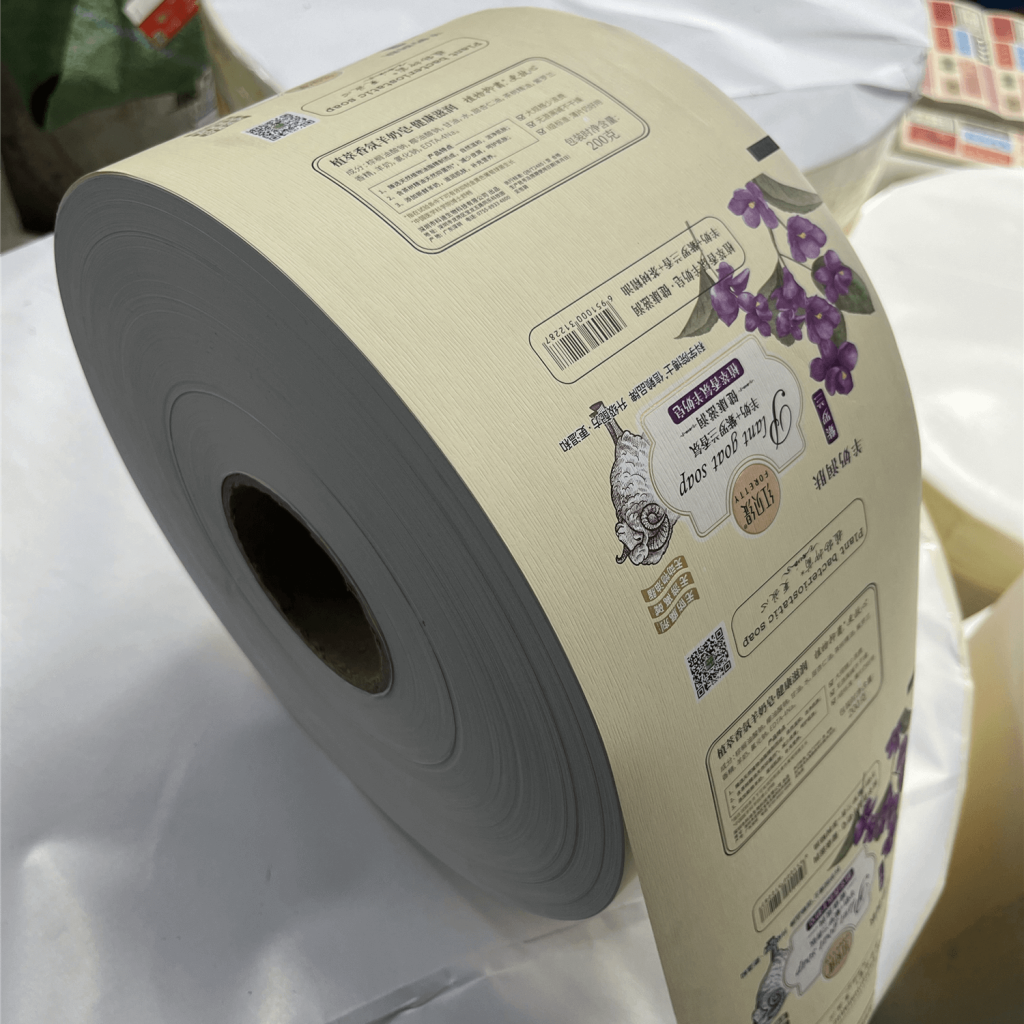 Etiquetas y envasesimpresión personalizada película de embalaje de jabón con papel de envoltura plegable de cera para el jabónRevise la impresión personalizada de Soap Packaging Film con papel envoltorio plegado de cera para jabón como una opción concreta dentro de Labels And Packaging y compare acabados,...Ver el producto
 Impresión de etiquetas en colorCannabis Stickers: Durable, Compliant & Custom Printed Labels for Cannabis ProductsReview Cannabis Stickers: Durable, Compliant & Custom Printed Labels for Cannabis Products as a concrete option within Color Label Printing and compare finish, format…Ver el producto
 Cajas de cigarrillos al por mayorCajas de cigarrillos personalizadasRevise las Cajetillas de Cigarrillos Personalizadas como una opción concreta dentro de las Cajetillas de Cigarrillos al por mayor y compare el acabado, el formato y el pedido que mejor se adapte a sus necesidades.Ver el producto
 Envases de cigarrillosNuevas tendencias en el envasado de tabaco: revestimientos que retienen la humedad de los cigarrillos, BOPP, PET, películas termosellables y etiquetas adhesivas removibles de aperturaRevisar las nuevas tendencias en el envasado de tabaco:Revestimientos que retienen la humedad de los cigarrillos, BOPP, PET, películas termosellables y etiquetas adhesivas removibles de apertura como opción concreta dentro del envasado de cigarrillos...Ver el producto
Opciones conectadas
Opciones comerciales vinculadas a esta guía
Estas opciones conectadas mantienen la guía vinculada a las categorías de productos relacionados y a las principales opciones comerciales que los compradores suelen revisar antes de informarse.
Preguntas frecuentes sobre planificación
What details help speed up planning for Length, Width and Height: A Buyer’s Guide to Getting Packaging Dimensions Right?
Un informe inicial más limpio suele incluir las dimensiones deseadas, la dirección del material, las expectativas de acabado, la cantidad, los requisitos del mercado y el destino de la entrega. Estos puntos eliminan las conjeturas antes de que comience el muestreo o el presupuesto.
Can Length, Width and Height: A Buyer’s Guide to Getting Packaging Dimensions Right be aligned with related packaging components?
Sí. Los trabajos tienden a desarrollarse mejor cuando los componentes adyacentes se revisan juntos, especialmente cuando el acabado, las aprobaciones, las características de seguridad o el rendimiento de envío deben ser coherentes en todo el paquete final.
How can I move from research to a quotation for Length, Width and Height: A Buyer’s Guide to Getting Packaging Dimensions Right?
Utilice el formulario de contacto con las dimensiones principales, el estado de la obra, la cantidad y el destino. De este modo, HKKAYU dispondrá de contexto suficiente para comentar la viabilidad y la dirección del presupuesto, en lugar de limitarse a responder a un encargo parcial.
¿Qué suele facilitar la siguiente conversación con el proveedor?
Comparta el mercado previsto, la banda de cantidades, las expectativas de acabado, el método de envío y cualquier componente vinculado que deba coincidir. De este modo, la próxima conversación se centrará en el trabajo real y no en suposiciones generales.
Guías del comprador
Más guías del comprador en la misma familia de productos
Siga comparando especificaciones, detalles de homologación y opciones de productos adyacentes con estos recursos relacionados.
HKKAYU
¿Listo para convertir el informe en un paso práctico?
Comparta las dimensiones principales, la cantidad, el estado de las ilustraciones y el destino de la entrega y HKKAYU podrá revisar el trabajo teniendo en cuenta la realidad de la producción.
Lo que suele ayudar primero
Enviar un resumen inicial de limpieza
- Dirección principal del producto y componentes impresos relacionados.
- Estado de las ilustraciones, banda cuantitativa y plazos de aprobación.
- Destino de la entrega, prioridad de acabado y plazo comercial.
