













Senza categoria
Etichette antitaroccamento: come proteggono davvero il tuo marchio le etichette di sicurezza?
HKKAYU • Guida all'acquisto B2B
Anti-Counterfeit Stickers: How Do Security Labels Actually Protect Your Brand?
A counterfeit version of your product rarely reveals itself at first glance. It takes up space on the same shelf as the real thing, uses a similar box…
Brief di pianificazione
Cosa viene solitamente confermato in anticipo
- Direzione principale del prodotto e relativi componenti stampati.
- Stato dell'opera d'arte, fascia di quantità e tempi di approvazione.
- Destinazione di consegna, priorità di finitura e scadenza commerciale.
Indice dei contenuti
Passare alla sezione desiderata
Focus di lettura B2B
Cosa devono confermare un buyer, un responsabile degli acquisti o un proprietario di progetto
- Verifica come la raccomandazione influisce sulla chiarezza delle specifiche, sul flusso di approvazione e sulla coerenza degli ordini ripetuti.
- Usa l'articolo come supporto all'acquisto, non solo come riferimento di design: approvvigionamento, tempi di consegna e controllo della produzione contano.
- Conferma il passo successivo in base ai tempi commerciali, al mercato di destinazione e al brief di packaging più ampio.
A counterfeit version of your product rarely reveals itself at first glance. It takes up space on the same shelf as the real thing, uses a similar box and leaves no obvious clues for the customer to distinguish between the two. By the time complaints, refunds and a damaged reputation start circulating, it’s often too late to recover.
This is where anti-counterfeit stickers come in. A thoughtfully devised security sticker offers your staff, distributor network and customers an easy way to verify that the product is genuine. Below, we outline how they work, what features to look for and what to prepare to request a quote from a supplier.
What Are Anti-Counterfeit Stickers?
Anti-counterfeit stickers are labels created to facilitate detection of fake products. Unlike traditional signs and graphics that come with a label, anti-counterfeit stickers use materials, print methods and checks to allow distinguishing an original and a counterfeit.
A sticker can be made to use a combination of materials, methods and visual aids. These can include such elements as:
- Tamper-proof attributes, indicating that a package has been opened
- Overt signs, which are obvious to a customer
- Covert features, invisible without a special tool
- Variable tag elements, including unique QR code, to identify a specific pack
The idea is that anti-counterfeit stickers should make a counterfeit look counterfeit. A sticker is thus a security feature that makes counterfeiting less valuable since it requires more resources to reproduce.
Why Do Brands Use Security Labels?
Counterfeiting is not only a problem for high-end brands. Any product with a recognizable logo can become a target for counterfeiters. The list ranges from cosmetics and electronics to wine, dietary supplements, and even regulated medical devices.
It is used by brands to
- Reduce counterfeits: the more complex protection technology is, the more complicated it is for forgers to replicate
- Control the supply chain: serialized security tags allow you to track the location of a product and detect counterfeits with confidence
- Protect warranty claims: to prevent fraud, the tracking code must be validated during the claim process
- Reassure customers: many buyers are wary of fakes and welcome any sign that the company cares about protecting them from fraud
- Prevent unauthorized reuse of packaging: special seals can prevent tampering and indicate whether the package has been opened.
Which Security Features Should You Choose?
There is no single best feature. It’s a matter of priorities and who needs to verify the product (or who might try to pass off a fake).
Overt features for visual checks at a glance
Some features are clearly visible, such as hologram security stickers. These provide a deterrent to forgers and offer simple verification by distributors, retail staff and customers. Good for high value or regulated products where visual assurance is key.
Covert features for extra security
Covert features are more subtle, and provide an additional level of checks that a would-be forger is less likely to be able to replicate. One example is invisible ink stickers, which can be revealed during a verification check. Many companies keep these in their security arsenal for investigators to use, rather than displaying them on the product itself.
Serialisation or digital verification
Serial numbers or QR codes add a level of complexity, allowing individual labels to be verified against a database and proving the authenticity of that particular item. Combined with overt print security features it creates a strong verification ecosystem. If you’re dealing with excise or
tax stamping, digital tax stamps and serialisation can work alongside your print security features.
Tamper evident
For cartons, bottles and outer packaging, a security label which detaches or leaves a visible mark if removed can provide added protection against tampering and refilling. Can be useful in import and distribution chains or for warranty verification.
Most successful labelling programs will use a mix of different features to build a strong defence- in-depth security system. A hologram sticker might be supplemented with a covert feature and a serial number for verification.
Where Are Anti-Counterfeit Stickers Used?
You will find them in a number of different industries. Some typical applications are described below:
- Security seals for cartons, bottles, and outer packaging
- Authentication labels for branded or high-value products
- Warranty and distribution control
- Packaging of regulated products where the label has more than an informational purpose
Sourcing Anti-Counterfeit Stickers in China: What Should You Know?
Many international brands are considering China for anti-counterfeiting stickers because of the large label and security printing industry and the number of different production methods available under one roof – but that choice needs to be made with eyes wide open
Some practical advice:
- Define clearly the security objective to ensure the right features are specified to combat either counterfeiting, grey-market leakage or tampering.
- Request a sample to be able to evaluate how a particular feature might look and behave on the final packaging.
- Take the whole packaging into account: finishes and approvals for labels, cartons and other elements need to be considered together.
- Plan delivery schedules in advance: timelines, shipping options and customs requirements at the destination should be defined from the start.
At Kayu Printing, we take care of labels, packaging and security print, which helps when a security label needs to complement the whole packaging rather than be considered in isolation.
What Should You Prepare Before Requesting a Quote?
A clear brief saves time and guesswork for everyone. Before contacting a supplier, it’s useful to have an idea of
The basics
- The label size and quantity, along with the intended market and delivery address.
- Is artwork provided or do you require any approvals?
The technical details
- What surface are the labels going on to? Is it paperboard, plastic, glass, foil, curved or another surface?
- Are there any durability requirements or storage conditions?
- Do you have a preferred finish, and do you need to match existing components?
The security requirements
- Do you need overt, covert or both security features?
- Do you require tamper evident/destructible, holographic, multi-secure or other features?
- Are there any requirements for numbering, QR logic, hidden print or audit trail control?
If you don’t have answers to the above that’s fine, just share what you do know and a good supplier will guide you towards suitable options.
Talk to Kayu Printing About Your Security Labels
If you are considering developing an anti-counterfeit sticker programme, our team can assess your brief and advise on a suitable material and set of features prior to sampling or production. You may wish to browse our security and tax stamp range, compare hologram security stickers and invisible ink stickers, or request a quote with your size, quantity, artwork status and delivery destination in mind.
Domande Frequenti
Cosa rende un adesivo anticontraffazione?
The critical attributes for anti-counterfeit stickers are those that relate to increased complexity of forging, inspection friendliness, and presence of multiple verification levels (such as tamper evident features, visible print elements, hidden security components, variable data or serialisation)
Are anti-counterfeit stickers worth it for small brands?
For smaller organisations, it is often a question of getting ahead of the curve and getting
protection before grey markets, knockoffs, and returns due to counterfeiting become too
expensive to manage.
Should the security feature be obvious or hidden?
Both approaches have their advantages, with the former building consumer confidence and the latter providing added protection through obscurity. In practice, the most common choice is to have a combination of visible and hidden security elements.
Le etichette anticontraffazione possono funzionare con la verifica digitale?
Yes, serialised QR codes and numbering can be part of the sticker, along with other print security elements, offering a multi-layer verification capability.
Can anti-counterfeit labels be applied to different packaging materials?
In most cases, yes. However, the construction of the label (material) will depend on the surface that it will be applied to. Paperboard, plastic, glass, metal, or foil, as well as the shape (curved surface or flat), will impact the choice of adhesive and construction. Provide the necessary details and we will advise you accordingly.
Why source anti-counterfeit stickers in China?
Simplified, it is the availability of resources. China has the infrastructure and expertise to deliver on any label and security print project. All that is needed is to define the requirements clearly and double-check the sample.
What should I send to get an accurate quote?
Label dimensions, quantity, target market, the surface that will receive the sticker, desired level of security, whether artwork is ready or not, and delivery destination are required to calculate the cost and provide an accurate quote. In case some of these details are not available, we can still share general pricing guidance.
Prodotti rilevanti
Prodotti che questa guida aiuta a spiegare
Utilizzate queste opzioni di prodotto per passare dalla ricerca a formati, strutture e componenti reali legati alla guida.
 Etichette e adesiviAdesivi per auto personalizzati, decalcomanie 3D e targhe magneticheRecensione Adesivo auto personalizzato stampa targa temporanea, marchio protettore temporaneo, decalcomanie di trasferimento 3D, adesivi in pasta magnetica per esterni, etichette in vinile in metallo UV...Visualizza il prodotto
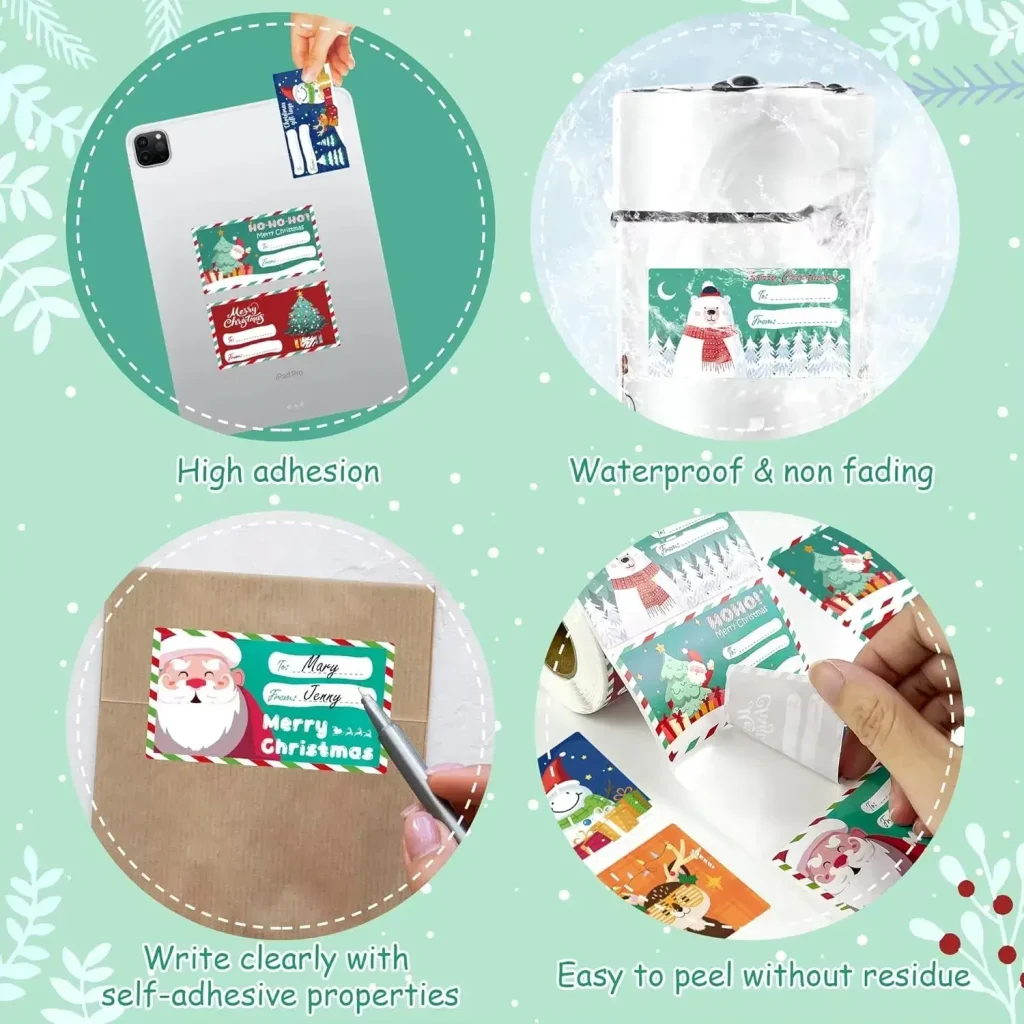 Rotoli di etichette personalizzate500 etichette natalizie impermeabili personalizzate per confezioni regaloRecensione Bulk 500PCS Natale impermeabile personalizzato stampato regalo Wrapping Packaging Sticker Label Tag per Natale regali decorazioni come opzione concreta all'interno ...Visualizza il prodotto
 Etichette e adesiviAdesivi olografici in carta ed etichette a striscia per stampa di sicurezza con stampa olografica casualeRecensione Stampa di sicurezza ologramma carta adesiva ologramma striscia etichetta casualmente ologramma stampaggio come opzione concreta all'interno di etichette e adesivi e confrontare finitura, formato...Visualizza il prodotto
 Etichette e adesiviEtichette e adesivi personalizzati con stampa a caldo in oroValuta le etichette e gli adesivi personalizzati in foglia d'oro come opzione concreta all'interno di Etichette e adesivi e confronta finitura, formato e idoneità all'ordine per il tuo…Visualizza il prodotto
Opzioni collegate
Opzioni commerciali collegate a questa guida
Queste opzioni collegate mantengono la guida legata alle categorie di prodotti correlati e alle scelte commerciali principali che gli acquirenti di solito esaminano prima di informarsi.
Domande comuni sulla pianificazione
What details help speed up planning for Anti-Counterfeit Stickers: How Do Security Labels Actually Protect Your Brand??
Una richiesta iniziale chiara comprende solitamente le dimensioni desiderate, i materiali previsti, le finiture richieste, la quantità, i requisiti del mercato e la destinazione di consegna. Questi dati riducono le incertezze prima della campionatura o del preventivo.
Can Anti-Counterfeit Stickers: How Do Security Labels Actually Protect Your Brand? be aligned with related packaging components?
Sì. I lavori tendono a filare più lisci quando i componenti adiacenti vengono esaminati insieme, soprattutto quando l'abbinamento delle finiture, le approvazioni, le caratteristiche di sicurezza o le prestazioni di spedizione devono rimanere coerenti nel pacchetto finale.
How can I move from research to a quotation for Anti-Counterfeit Stickers: How Do Security Labels Actually Protect Your Brand??
Indicate nel modulo di contatto le dimensioni principali, lo stato di preparazione dei file di stampa, la quantità e la destinazione di consegna. HKKAYU avrà così informazioni sufficienti per valutare la fattibilità e impostare il preventivo.
Cosa facilita di solito la discussione con il fornitore successivo?
Condividete il mercato previsto, la fascia di quantità, le aspettative di finitura, il metodo di spedizione e tutti i componenti collegati che devono corrispondere. In questo modo, la conversazione successiva si basa sul lavoro reale e non su ipotesi generiche.
Guide all'acquisto
Più guide all'acquisto nella stessa famiglia di prodotti
Continuate a confrontare le specifiche, i dettagli di omologazione e le scelte dei prodotti adiacenti con queste risorse correlate.
HKKAYU
Siete pronti a trasformare il brief in un passo successivo pratico?
Condividete le dimensioni principali, la quantità, lo stato dell'opera d'arte e la destinazione di consegna e HKKAYU potrà rivedere il lavoro tenendo conto della realtà produttiva.
Ciò che di solito aiuta per primo
Invia una descrizione iniziale più chiara del progetto
- Direzione principale del prodotto e relativi componenti stampati.
- Stato dell'opera d'arte, fascia di quantità e tempi di approvazione.
- Destinazione di consegna, priorità di finitura e scadenza commerciale.
